You started the ketogenic diet to lose weight, improve blood sugar, or increase mental clarity, but instead, you have developed an itchy, red rash. If this sounds familiar, you may be experiencing a keto diet rash or prurigo pigmentosa. It is a rare inflammatory skin disorder that has been reported in people following ketogenic diets, prolonged fasting, rapid weight loss, or other situations that increase ketone production. So, let’s learn all about the keto diet skin rash, its triggers, symptoms, and the practical ways to reduce and avoid it.
Highlights
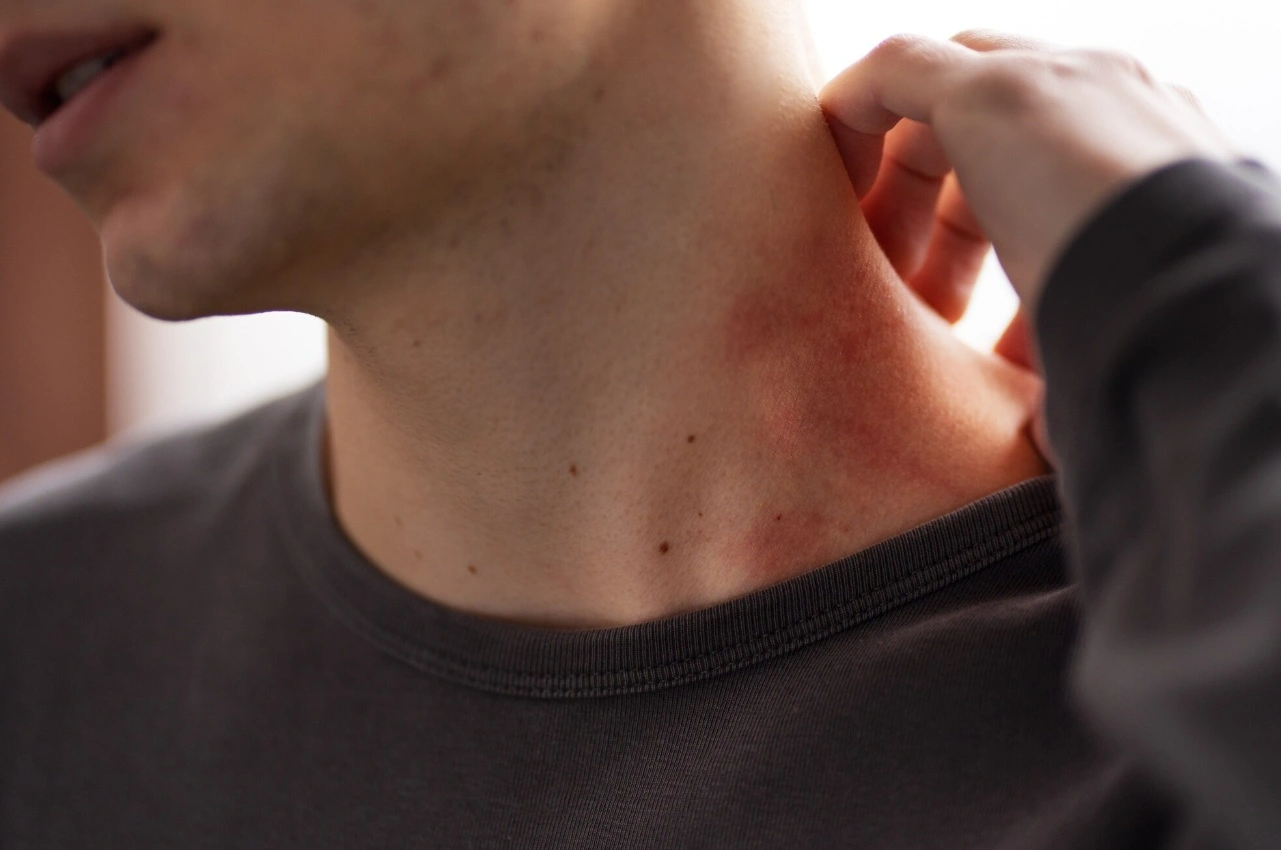
Keto Diet rash is the informal name for prurigo pigmentosa, a rare inflammatory skin disease that has been associated with ketogenic diets and other situations that produce ketosis [1] [2].
Although this condition was first identified decades before the ketogenic diet became popular, physicians have reported a growing number of cases among people following very-low-carbohydrate diets.
Researchers believe that ketosis may act as a trigger in susceptible individuals, but the exact biological mechanism has not yet been established.
Unlike allergic reactions, keto rash is not caused by an allergy to meat, fat, or ketone supplements. Instead, it seems to be an inflammatory response that appears shortly after entering or maintaining ketosis.
Despite its appearance, a keto diet rash is not contagious and cannot be spread to other people. The table below shows the most important points about the keto diet skin rash.
Learn More: Histamine Intolerance Reaction on Carnivore: Is It Serious?
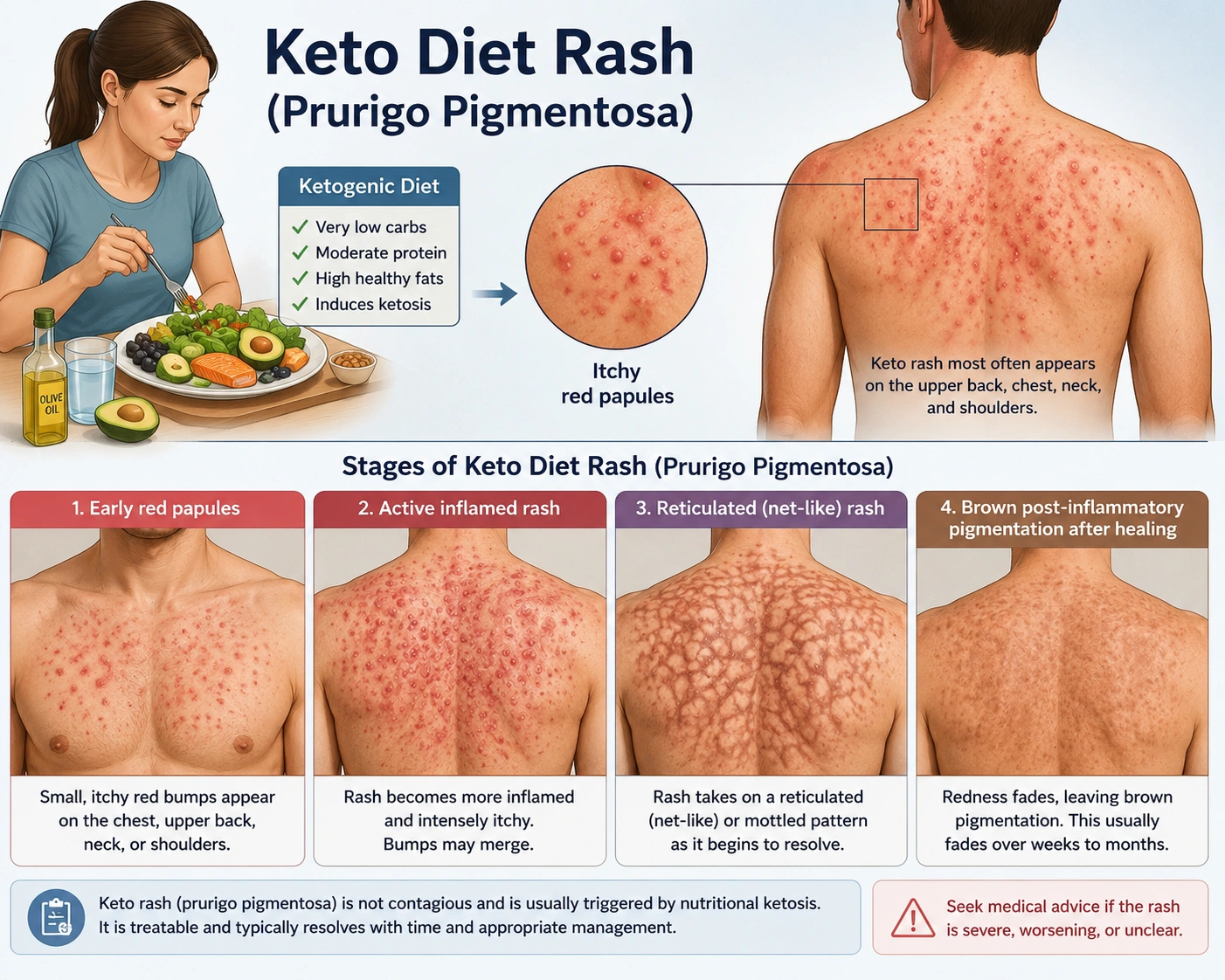
A keto diet rash can be mistaken for eczema, heat rash, or an allergic reaction because it changes appearance as it heals.
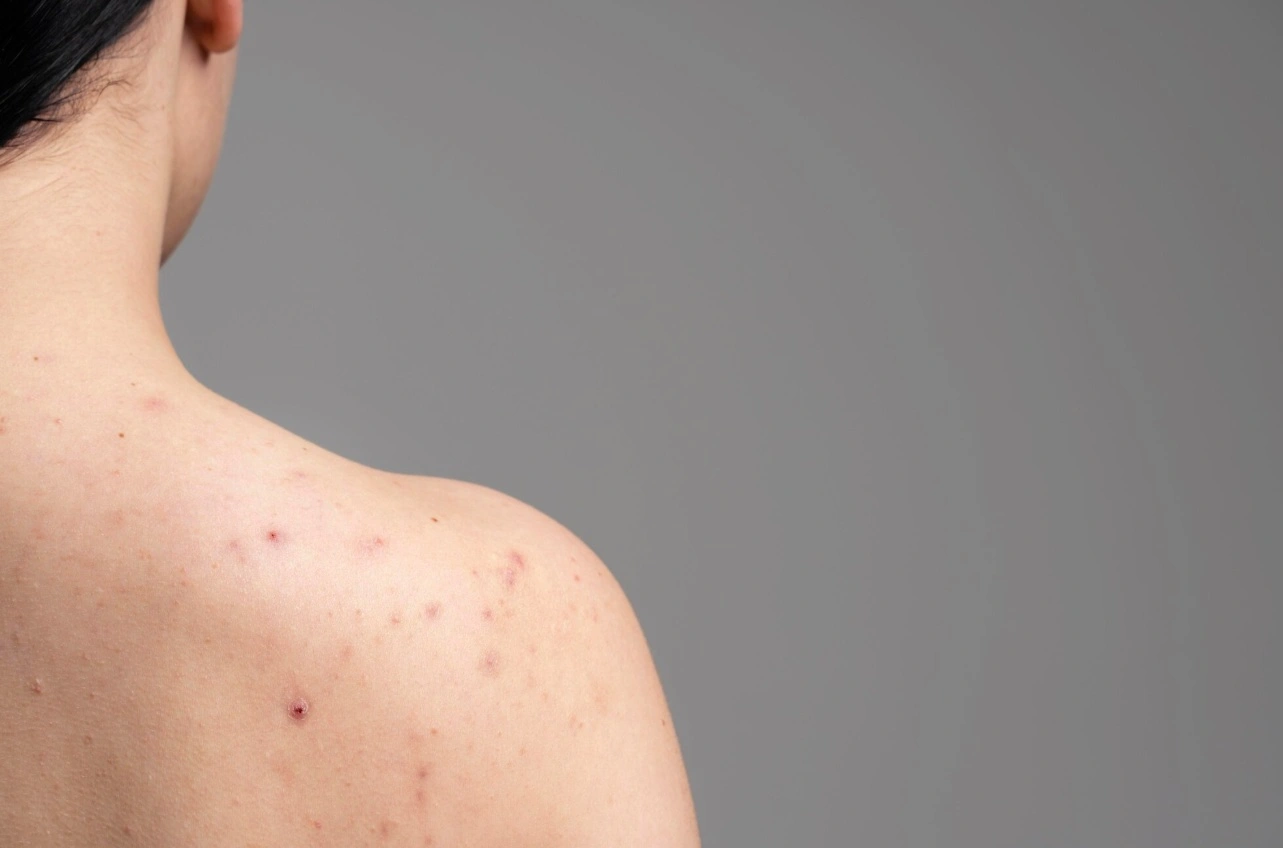
Most people first notice small, intensely itchy red bumps that develop suddenly on the upper body. Over several days, these bumps can merge into larger, inflamed patches with a symmetrical, net-like pattern.
As the inflammation reduces, the redness fades, but many people are left with brown discoloration known as post-inflammatory hyperpigmentation. These dark marks can remain long after the itching has gone.
The table below summarizes the four stages of the keto diet rash.
Learn More: Carnivore Diet Side Effects and How to Avoid Them
Key Point: The lingering brown pigmentation does not necessarily mean the rash is still active. In many cases, it reflects normal healing after skin inflammation.
Unlike hives, a keto diet rash does not usually appear and disappear within hours. Instead, it persists for days or weeks unless the trigger is addressed.
So, the important point is how we can find out if we are involved with a keto diet rash and not allergies or similar issues.
Learn More: The Keto Diet: A Free Guide to Lose Weight & Improve Health
Although symptoms vary from person to person, a keto diet skin rash has a regular pattern. The main symptom is itching, which usually begins before the rash is fully visible [3] [4] [5].
In addition to itching, which is usually the first sign, the most common symptoms include:
Less commonly, some people may notice:
Unlike many infectious rashes, keto rash does not cause fever, chills, or generalized illness. However, the skin irritation can negatively impact sleep or daily activities.
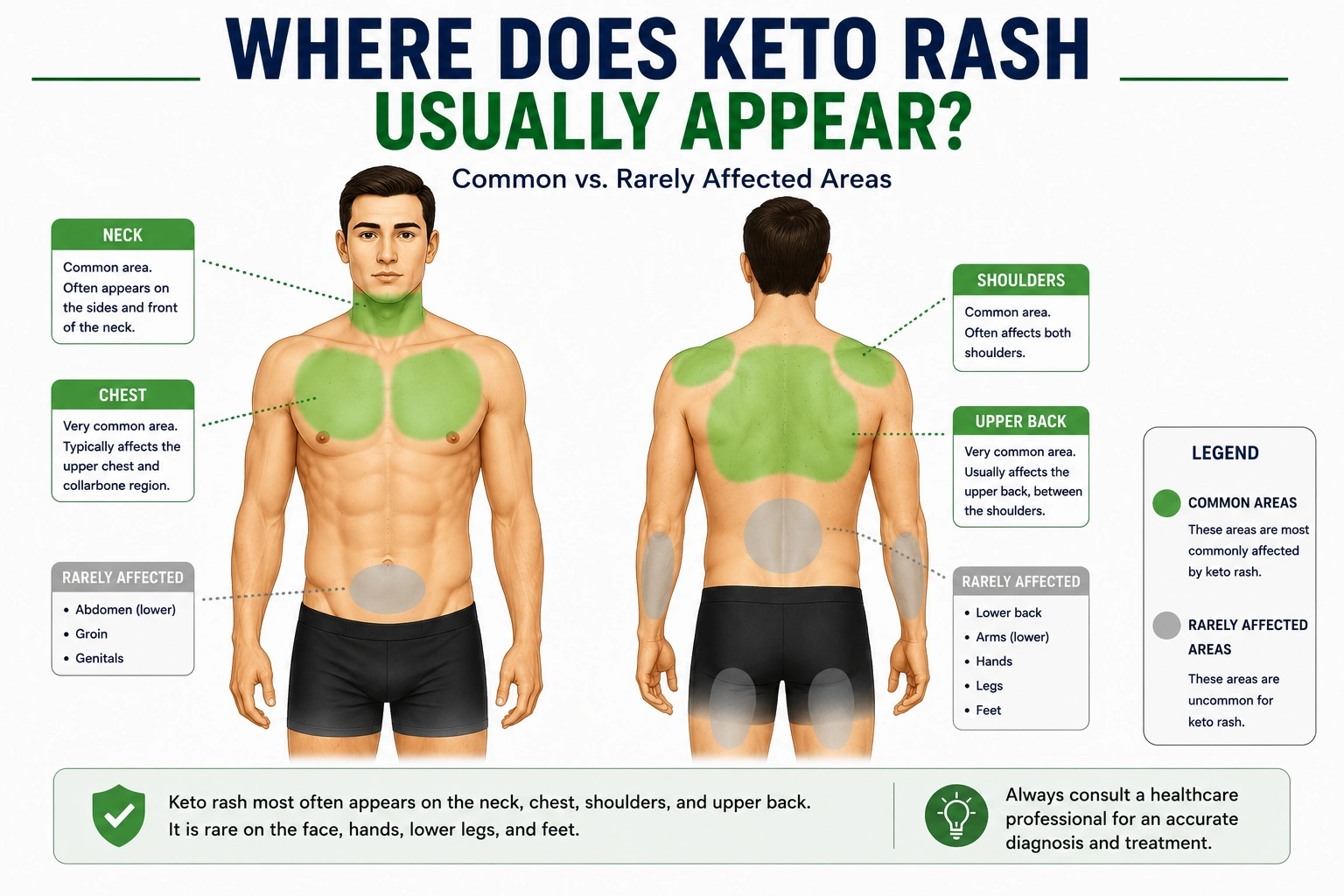
In addition to these symptoms, you can identify a keto diet rash based on the parts of the body that show the rash.
Learn More: Long-Term and Short-Term Side Effects of The Carnivore Diet
Keto rash distribution helps distinguish it from many other skin conditions. It usually affects the upper trunk, especially areas where clothing, sweat, and friction may contribute to irritation.
The most common locations include:
Less commonly, it may spread to the:
It is uncommon for keto rash to appear on the hands, feet, face, and lower legs. Because the rash usually appears on both sides of the body, a symmetrical pattern is another clue that healthcare providers consider during diagnosis.
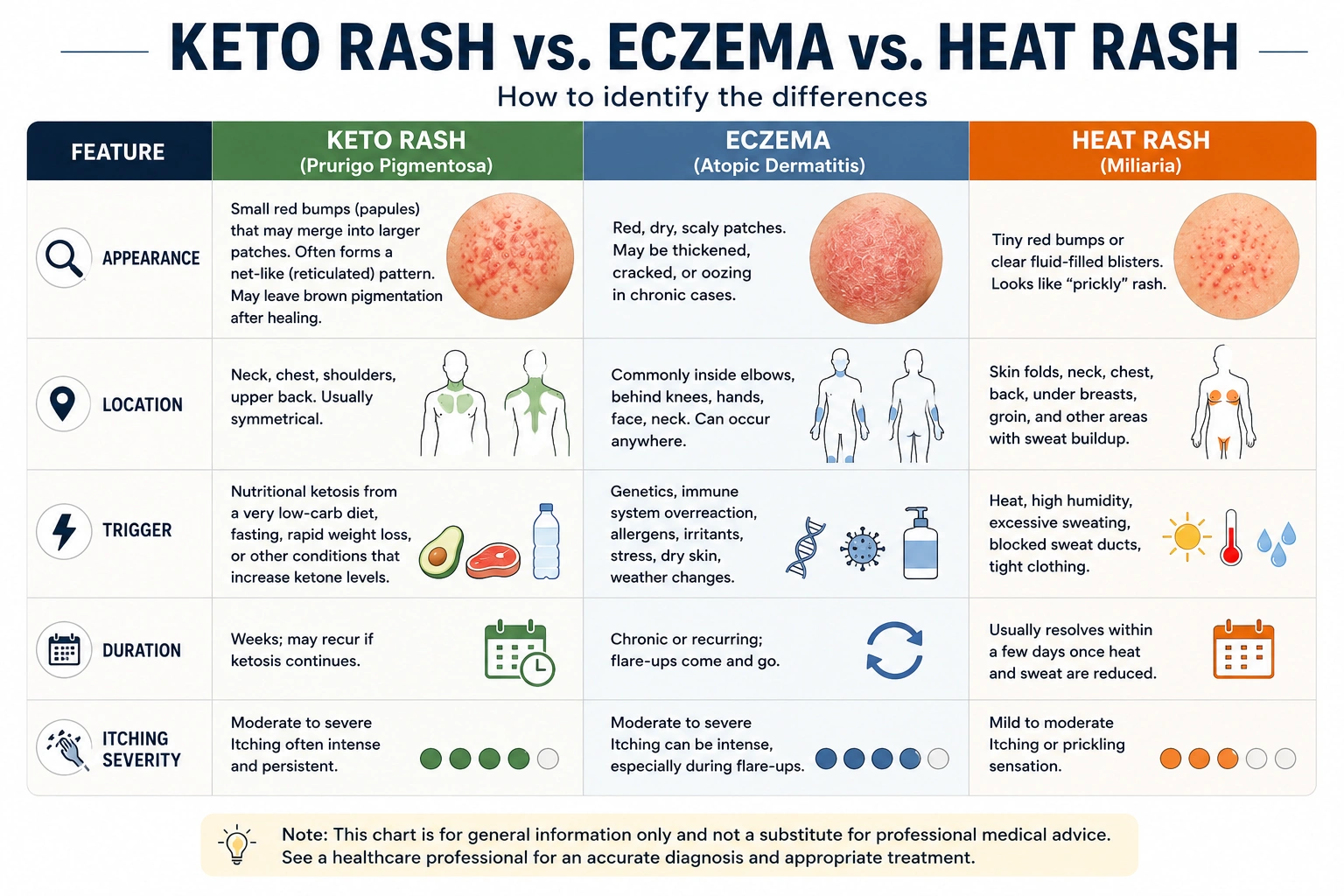
Comparing a keto diet rash with other skin conditions can also help us understand whether we are experiencing a keto diet skin rash.
Many skin conditions can resemble keto rash during their early stages. The table below shows some of the key differences [6].
Important: A new or worsening rash should never be self-diagnosed based on internet photos alone. Many skin conditions look similar, and an accurate diagnosis may require examination by a healthcare professional or dermatologist.
Still, one of the biggest questions people ask after developing a keto diet rash is why it happens in the first place.
Learn More: The Low-Carb Diet: Your Free Beginner’s Guide
Unfortunately, researchers still do not have a complete answer as to why a keto diet rash develops.
While keto rash (prurigo pigmentosa) has been repeatedly linked to nutritional ketosis, the exact cause remains unknown.
Most of the available evidence comes from case reports and small observational studies rather than large clinical trials.
Researchers believe ketosis is linked to keto rash, but they have not proven that ketones directly cause the condition. Instead, several biological mechanisms have been proposed.
The important takeaway is that the current evidence suggests ketosis is a trigger in susceptible individuals, not necessarily the sole cause of keto rash.
This distinction matters because millions of people follow ketogenic diets without ever developing the condition.
Several hypotheses have been proposed to explain the connection between ketosis and prurigo pigmentosa.
Although no hypothesis has been certainly proven, together they help explain why a keto diet rash appears shortly after entering ketosis and improves when ketosis ends.
Learn More: 28-Day Keto Meal Plan + Plans Based on Your Caloric Needs
The main theory is that increased ketone bodies somehow promote inflammation around tiny blood vessels in the skin [7].
Researchers suspect that ketones may attract inflammatory immune cells called neutrophils, leading to an itchy rash seen in prurigo pigmentosa [8].
This theory is supported by skin biopsy findings, which show inflammatory cells around superficial blood vessels during the early stages of the disease.
However, scientists still do not know why this occurs in only a small number of people, whether ketones directly activate neutrophils, or whether another metabolic change is responsible.
Many reported cases occur during the first few weeks of starting keto, when the body is making major metabolic adjustments. During this period [9]:
Some researchers believe this rapid metabolic transition, rather than ketosis itself, can lead to the inflammatory response.
This can explain why keto rash develops in the first two to four weeks of starting a ketogenic diet.
Learn More: The Carnivore Diet: What Are Its Benefits and Side Effects?
Microscopic examination of affected skin sometimes shows inflammation centered around hair follicles [10].
This has led researchers to suggest that ketosis or related metabolic changes may alter the skin environment enough to trigger localized inflammation. However, it has not yet been proven.
Many patients report that their itching becomes worse after exercise, sweating, hot weather, and tight clothing [11].
Sweat is not believed to cause keto rash. Instead, heat, moisture, and friction seem to aggravate skin that is already inflamed. This explains why the rash commonly develops on [12]:
where sweating and friction are common.
The image below shows how ketosis may lead to skin inflammation.
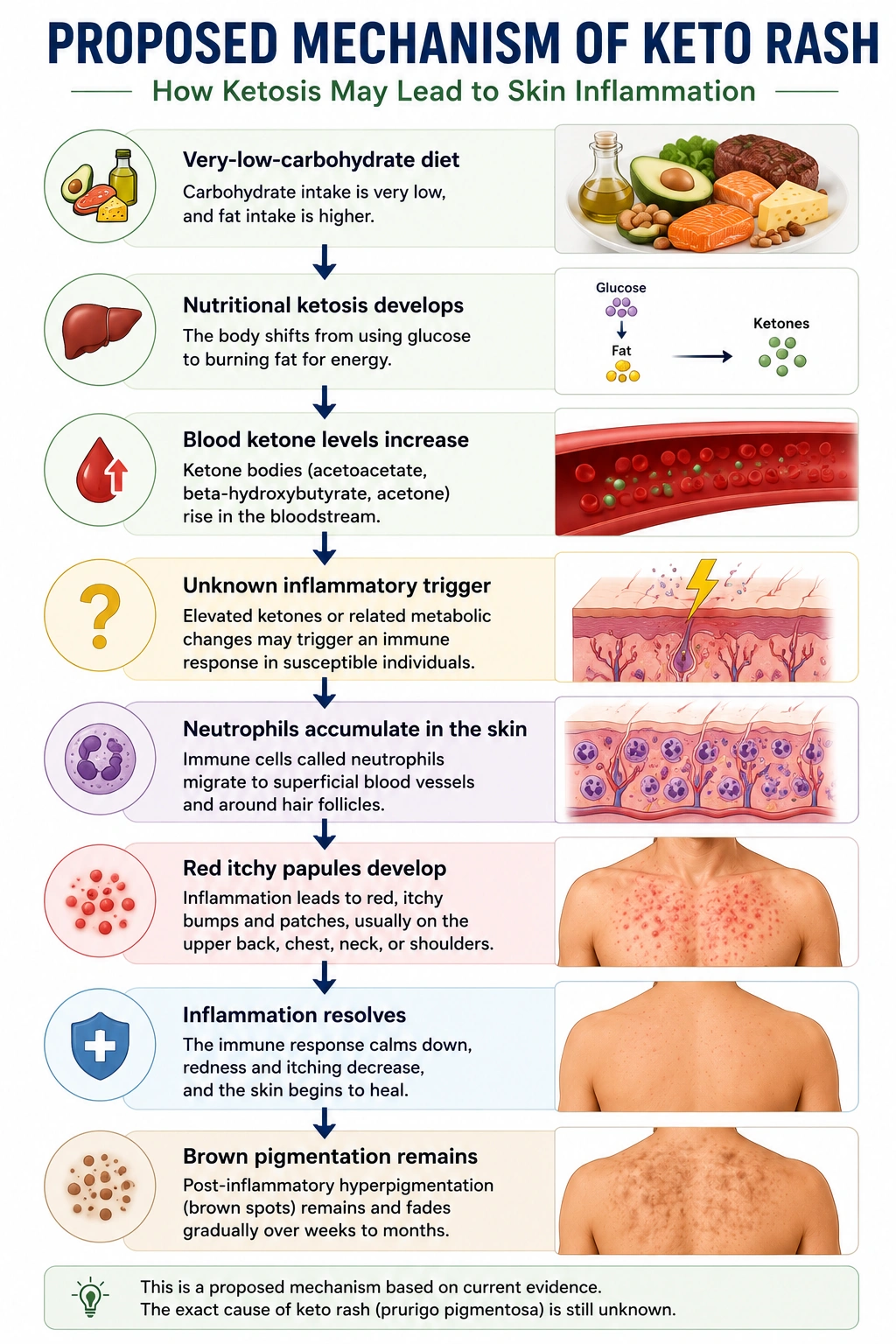
Note: This pathway is a proposed mechanism based on current evidence, not a proven sequence of events.
No, in fact, the majority of people following ketogenic diets never develop keto rash. It means that ketosis alone is not sufficient to cause the condition.
Scientists suspect that keto rash results from an interaction between ketosis and other individual factors, such as:
Exactly which combination of factors is responsible is still unclear.
Whatever the cause of the keto diet skin rash may be, let’s learn how we can cure and avoid it.
There is not a single cure that works for everyone because the exact cause of keto diet rash (prurigo pigmentosa) is not fully understood. Treatment depends on how severe the rash is and whether ketosis is acting as the trigger [13].
The table below shows some of the evidence-based ways to treat a keto diet rash.
Current research does not support these as proven treatments:
Summary: The most effective treatments supported by current research are temporarily reducing ketosis (by increasing carbohydrate intake) and, when needed, prescription anti-inflammatory antibiotics under the guidance of a healthcare professional. Gentle skin care can help relieve symptoms, but supplements and home remedies have not been proven to cure keto rash.
One of the most interesting observations in medical case reports is that many patients improve after increasing carbohydrate intake.
Learn More: 8 Leanest Steak Cuts to Gain Protein and Lose Weight + Tips
Studies do not prove that carbohydrates are a treatment. Instead, they suggest that reducing ketosis removes the trigger in many individuals.
When carbohydrate intake increases, insulin levels rise. This means ketone production decreases, which can also reduce the inflammatory trigger and improve skin inflammation.
Some people notice improvement in several days, while others require prescription treatment in addition to dietary changes.
Not everyone responds the same way, which further supports the idea that ketosis is one contributing factor rather than the main cause.
Another common myth online is that a keto diet rash is caused by low electrolytes.
Learn More: Keto Diet Electrolytes: Why They Matter & How to Get Enough?

Although electrolyte imbalances can occur during the first weeks of a ketogenic diet and may cause symptoms such as fatigue, headaches, muscle cramps, or the keto flu, there is currently no strong evidence that electrolyte deficiencies directly cause keto rash.
This misconception arises because both conditions can occur during the early stages of keto adaptation. However, just because two things happen together does not mean one caused the other.
Current studies do not identify deficiencies in the Keto Diet electrolytes: sodium, potassium, magnesium, and calcium as primary causes of prurigo pigmentosa.
That said, consuming enough electrolytes is important for health and can help reduce other common side effects of the ketogenic diet.
Summary: Correcting electrolyte deficiencies is beneficial for many people on keto, but it should not be considered a proven treatment for keto rash.
Another common theory is that keto rash results from vitamin deficiencies.
Learn More: What Causes Carnivore Flu? Top 5 Ways to Recover Quickly
There is no convincing evidence that deficiencies in vitamins A, C, D, E, and the B vitamins directly trigger keto rash.
While severe nutrient deficiencies can certainly affect skin health, current research suggests that keto rash is an inflammatory skin disorder linked to ketosis, rather than a deficiency disease.
Also, since a keto diet rash is uncommon, researchers still do not know exactly why some people develop it while most ketogenic dieters never do.
People who may have a higher risk include those who:
Many reported cases have occurred in young women, although keto rash has also been documented in men and older adults.
Researchers are not sure whether women are biologically more susceptible or simply more likely to seek medical care for skin changes.
Learn More: The Benefits of Raw Dairy + Risks for The Carnivore Diet
Interestingly, a keto diet rash has been reported in several situations besides the ketogenic diet. These conditions share one common feature: they usually increase ketone production or cause major metabolic changes.
Most published case reports follow a similar timeline shown in the table below.
Many people worry that the rash is still active because dark patches remain after the redness disappears.
Learn More: Best Diet for Losing Weight from Belly: Low- vs. High-Carb?
In most cases, these marks are post-inflammatory hyperpigmentation (PIH), a common response to skin inflammation.
When the skin becomes inflamed, specialized cells called melanocytes may produce extra melanin (the pigment that gives skin its color).
As the inflammation heals, this excess pigment can remain temporarily, creating brown or gray-brown patches. Hyperpigmentation is not an infection and is not contagious.
Also, it does not necessarily mean the rash is still active. Over time, the skin renews itself, and the discoloration fades without permanent scarring.
Additionally, the brown marks may last longer under certain conditions.
Protecting the affected skin from excessive sun exposure can help prevent the pigmentation from becoming more noticeable while it heals.
Yes, some people experience a keto diet rash only once, while others develop another episode after returning to ketosis.
Researchers do not yet know why recurrence happens in some individuals but not others. Recurrence is more likely if:
If keto rash repeatedly returns, discuss the situation with your healthcare provider.
Learn More: Healthy Diets for Longevity: How to Live “Healthier” Longer?
You should seek medical care if:
A healthcare professional may recommend that you see a dermatologist, who can check whether the rash is prurigo pigmentosa or another skin condition requiring different treatment.
There is no single blood test that confirms keto rash. Instead, healthcare professionals diagnose it by considering:
In uncertain cases, a dermatologist may recommend a skin biopsy to confirm the diagnosis and rule out other inflammatory skin diseases.
Learn More: Foods with High Fiber: Do You Need Them on Low-Carb Diets?
A Keto Diet rash is an inflammatory skin condition that can occur during ketosis. Although its exact cause is still unknown, research shows a link between prurigo pigmentosa and situations that increase ketone production, including ketogenic diets, prolonged fasting, and rapid weight loss.
The condition usually begins as an intensely itchy, red rash on the chest, upper back, neck, or shoulders before healing with temporary brown pigmentation. A keto rash is generally treatable and not contagious.
If you develop a rash after starting a ketogenic diet, do not assume it is automatically keto rash or that you must leave the Keto Diet.
A healthcare professional can diagnose the cause and recommend the most appropriate treatment based on your symptoms and medical history.
Let’s find answers to the most frequently asked questions about the Keto Diet rash.
Keto rash is a rare inflammatory skin condition associated with ketosis. It causes itchy red bumps on the chest, upper back, neck, or shoulders, followed by temporary brown pigmentation as the skin heals.
Learn More: 10 Best High Protein Low Carb Meals + Recipes & Tips [2026]
Yes, keto rash is a nickname for prurigo pigmentosa when the condition develops during ketosis.
The exact cause is unknown. Researchers believe ketosis can trigger an inflammatory response in susceptible individuals, but no single mechanism has been proven.
It can be linked to ketosis, but most people who enter ketosis never develop keto rash. Having the rash is not a reliable indicator that you are in ketosis.
Usually no, but consult a doctor if you experience any persistent or unexplained rash.
The itching usually improves within days after effective treatment, while the rash may take several weeks to resolve. The remaining pigmentation can last several months.
Learn More: Low-Carb Anti Inflammatory Diet Meals to Reduce Inflammation
Not necessarily. Some people improve after temporarily increasing carbohydrate intake, while others continue keto under medical supervision.
Yes, but many people need dietary adjustments, prescription medication, or both. Early evaluation can shorten recovery and help prevent unnecessary discomfort.
Sometimes, dermatologists may prescribe anti-inflammatory medications that allow some people to remain on a ketogenic diet, especially when ketosis is medically necessary.
No, there is no evidence that keto rash is an allergy to the ketogenic diet itself or to keto foods.
Current studies do not support electrolyte deficiencies as a primary cause of keto rash.
Learn More: The Best Beef Organ Supplements 2026 for Immunity & Hormones
Yes, prolonged fasting has been associated with prurigo pigmentosa, likely because fasting increases ketone production.
The discoloration is called post-inflammatory hyperpigmentation. It is part of the normal healing process after skin inflammation and usually fades gradually over time.
Yes, intense itching is one of its most common symptoms and can begin before the rash is fully visible.
No, it cannot spread from person to person.
The rash may extend to nearby areas of the upper body, but it does not spread through contact with other people.
It is possible because the Carnivore Diet is very low or even zero in carbohydrates, leading to ketosis, which has been linked to prurigo pigmentosa in susceptible individuals.
Learn More: Low Carb & High Protein Meal Prep to Lose Fat & Gain Muscle
No, although both conditions can cause itching, they have different causes, appearances, and treatments.
They may help relieve symptoms in some people, but are usually less effective than other treatments when used alone.
No, sweating is not believed to cause the rash, although it may make the existing symptoms feel worse.
Most people experience temporary pigmentation rather than permanent scarring. However, repeated scratching may increase the risk of lasting skin changes.
No, it is considered a rare condition despite the growing popularity of ketogenic diets.