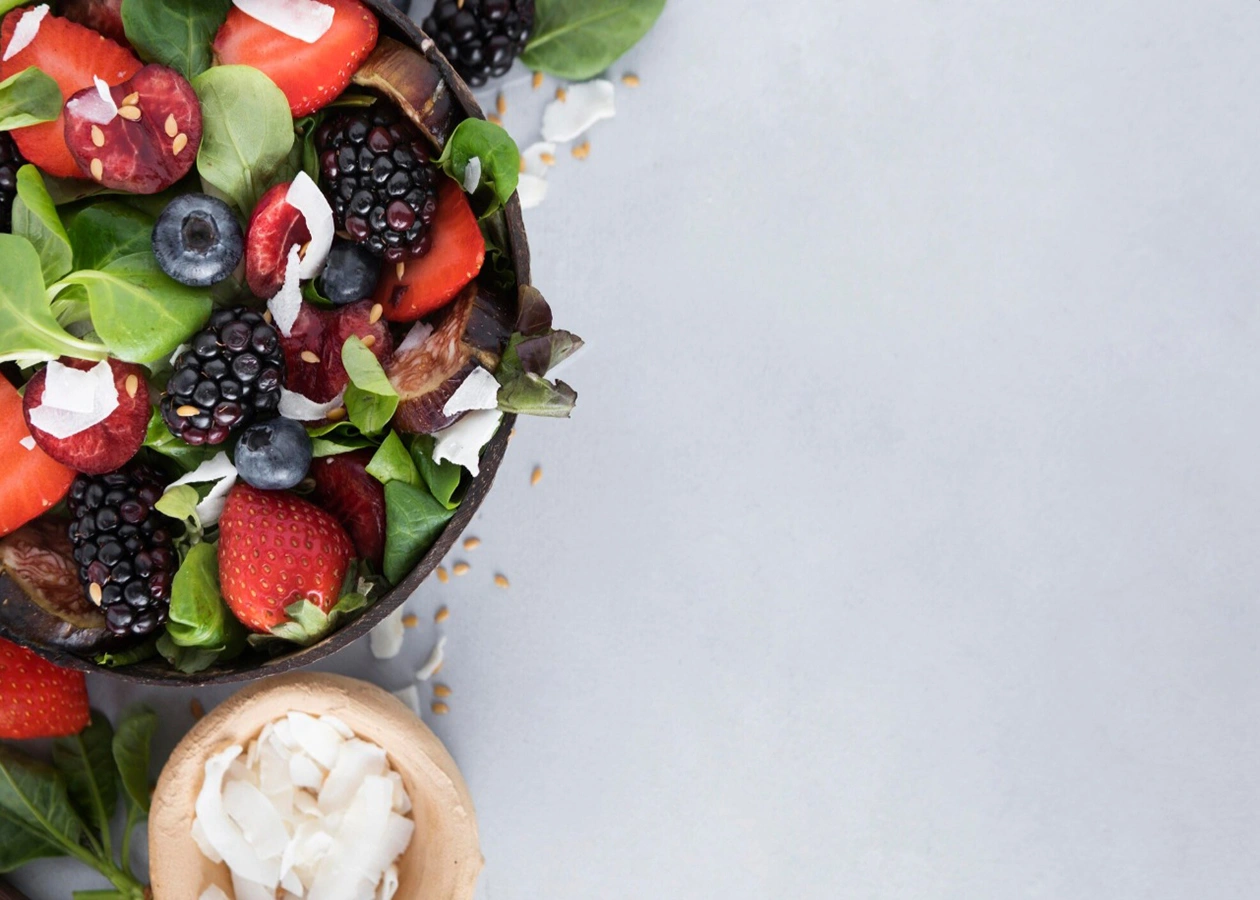
Many people assume keto means eating only meat. However, you can eat meat, eggs, healthy fats, and even keto firendly fruits and vegetables. In fact, choosing the right keto friendly fruits and veggies is one of the best ways to add fiber, vitamins, minerals, and antioxidants to your meals while staying in ketosis. The key is knowing which are really low in carbohydrates and which ones are not. So, let’s dig in and learn the must-know facts and tips about fruits and veggies on a Keto Diet.
Highlights
One of the biggest misconceptions about the ketogenic diet is that fruits should be completely excluded.
While some fruits are high in natural sugars and carbohydrates, many fruits are allowed on a ketogenic diet [1].
You do not have to avoid fruit entirely, but you should choose those that help you stay in your daily carbohydrate limit and induce ketosis.
Most ketogenic diets limit carbohydrate intake to 20-50 grams of net carbs per day. Because fruits vary in carbohydrate content, the fruit you choose matters much more than whether you eat fruit at all [2].
For example, half an avocado contains fewer than 2 grams of net carbs, while one medium banana contains more than 20 grams of net carbs. That difference can determine whether you remain in ketosis or quickly exceed your daily carb limit.
The good news is that many Keto friendly fruits also provide valuable nutrients such as:
Key Takeaways
✔ Fruit is not forbidden on keto.
✔ Low carb fruits are much better than high-sugar fruits.
✔ Portion size matters just as much as the type of fruit.
✔ Net carbs, not total carbs, are what most keto followers monitor.
Learn More: Keto Diet Electrolytes: Why They Matter & How to Get Enough?
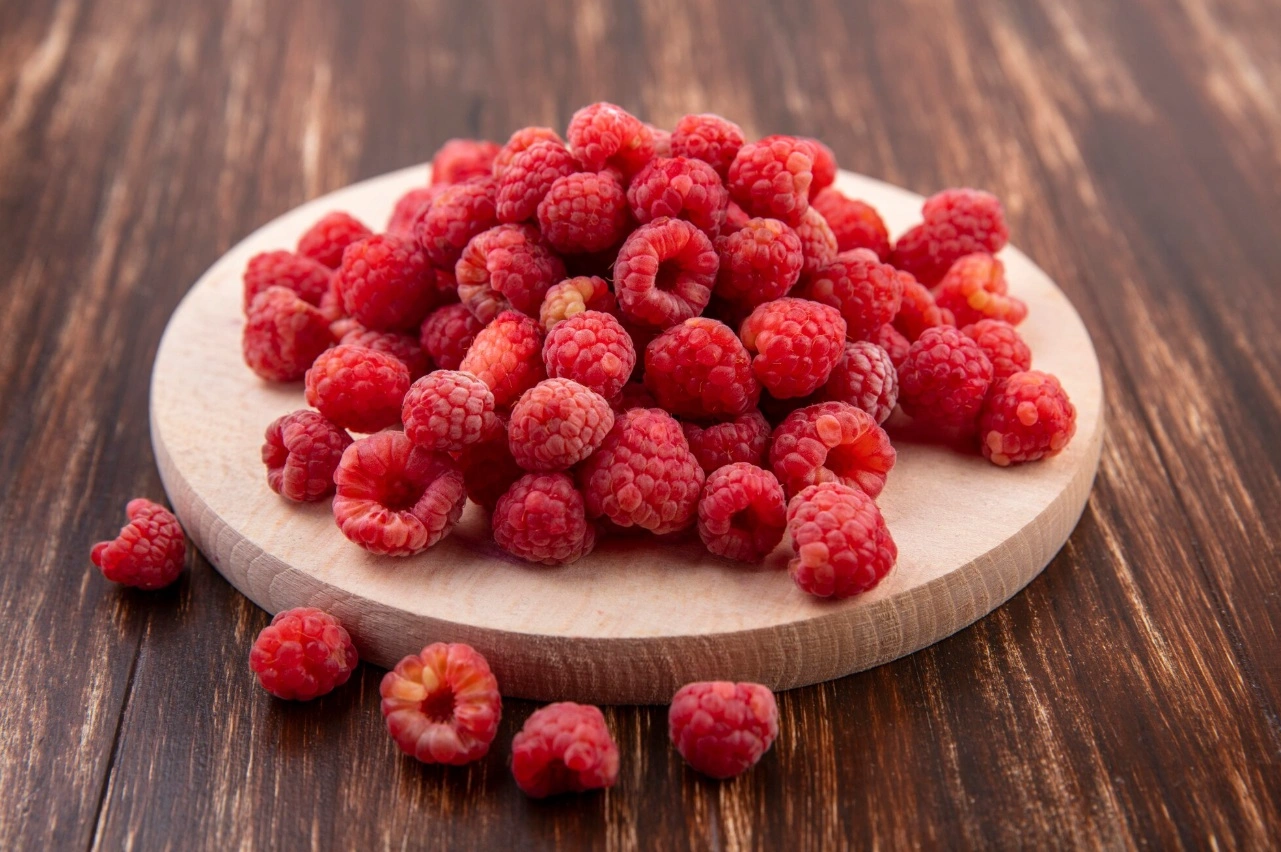
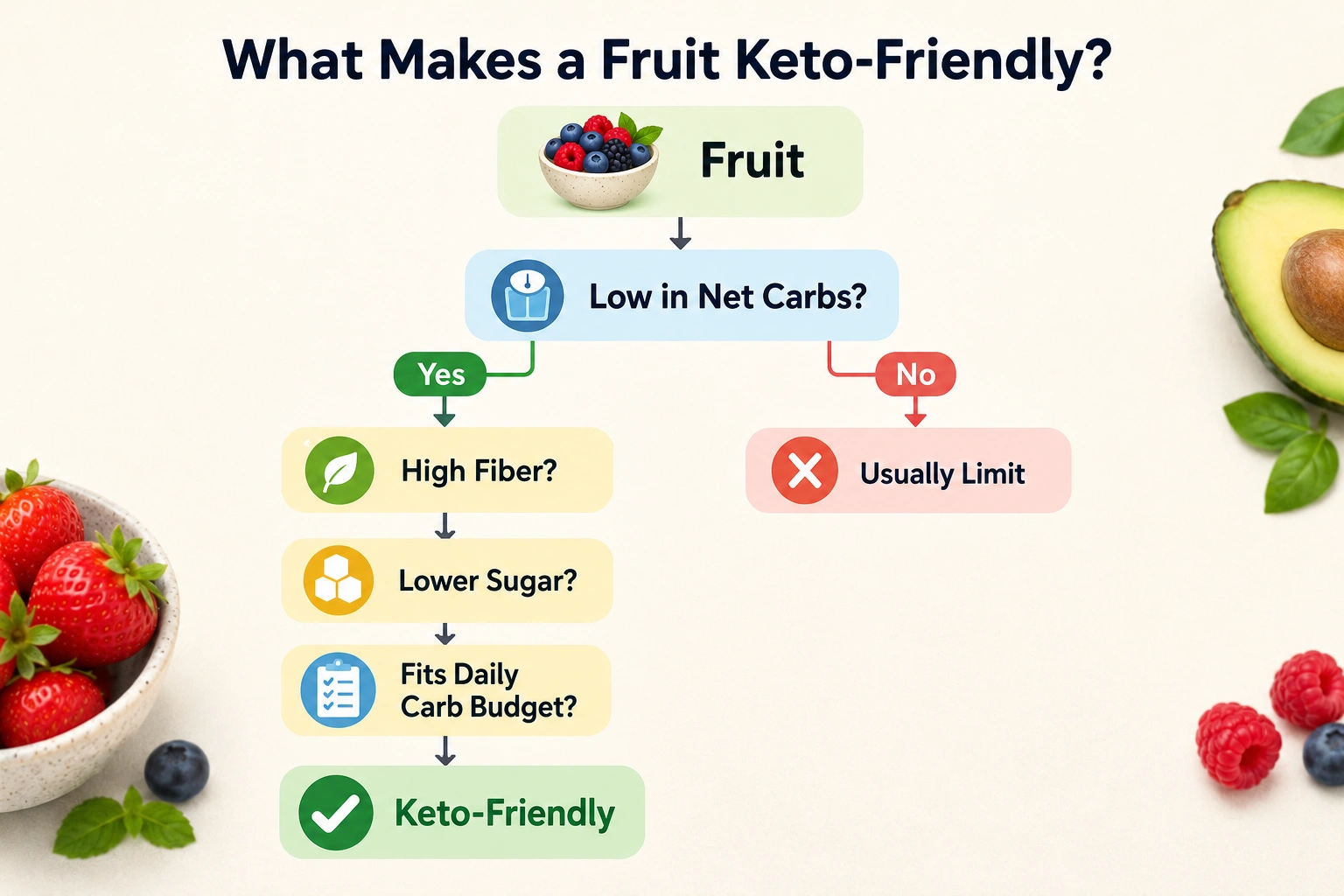
Different fruits affect your blood sugar or carbohydrate intake differently. Some contain large amounts of natural sugars, fructose, while others are rich in fiber, water, or healthy fats, resulting in fewer digestible carbohydrates [3].
Generally, you should look for the following characteristics when searching for keto friendly fruits:
Fiber slows digestion and is not fully absorbed by the body. Because of this, fruits that contain more fiber usually have fewer net carbs than fruits with similar total carbohydrate content.
High-fiber fruits can also improve satiety, support digestive health, and reduce blood sugar spikes.
Natural sugars, mainly fructose, glucose, and sucrose, contribute to a fruit's carbohydrate content. Fruits that contain less sugar are better for low-carb ketogenic diets.
The best Keto friendly fruits do not simply have low carbohydrate content; they also provide nutrients that support health. Many Keto friendly fruits contain:
Learn More: Yummy & Low Carb Quick Foods to Make Easily Under 10 Minutes
Even low-carb fruits can become high-carb foods if consumed in large quantities. For example, ¼ cup of raspberries is okay for keto. But four cups of raspberries may exceed your daily carb limits.
Serving size is just as important as food choice. If you are not sure how to balance your macronutrients and how much fat and protein or carbohydrates you need, use this Carnivore Macro Calculator to find the right ratio based on your age, gender, and activity level.
Last but certainly not least are carbohydrates. Keto friendly fruits must be low in net carbs.
Net carbs are the carbohydrates your body can digest and use for energy. Fruits with fewer net carbs more easily fit into a Keto Diet Meal Plan. The most common examples include:
Learn More: Carnivore Diet vs. Keto Diet: Results, Meals and Food List
One of the most confusing aspects of choosing keto friendly fruits and veggies is the difference between total carbohydrates and net carbohydrates.
Total carbohydrates include sugars, starches, and fiber. However, net carbohydrates are the carbohydrates your body is more likely to digest and use.
To find the net carbs of fruits, you can use this formula:
Net Carbs = Total Carbs − Fiber
Fiber is not fully digested in the small intestine and generally has a much smaller effect on blood glucose than sugars and starches.
Because of this, most ketogenic diets focus on net carbs rather than total carbs when planning meals.
However, if you have diabetes or another medical condition requiring carbohydrate management, follow the advice of your healthcare provider, as recommendations may differ.
Let’s look at some examples of total carbs vs. net carbs of fruits in the table below:
This explains why two fruits with similar total carbohydrate content may differ significantly in their net carb values.
Your goal on keto is to limit digestible carbohydrates enough to induce and maintain ketosis.
Learn More: The Primal Diet: from Low-Carb Eating to Health and Fitness
Fruit contains carbohydrates, and carbohydrates can influence ketosis. However, whether a fruit disrupts ketosis depends on how much you eat and how many carbohydrates you consume during the day [4] [5].
Here is a simplified overview of the process:
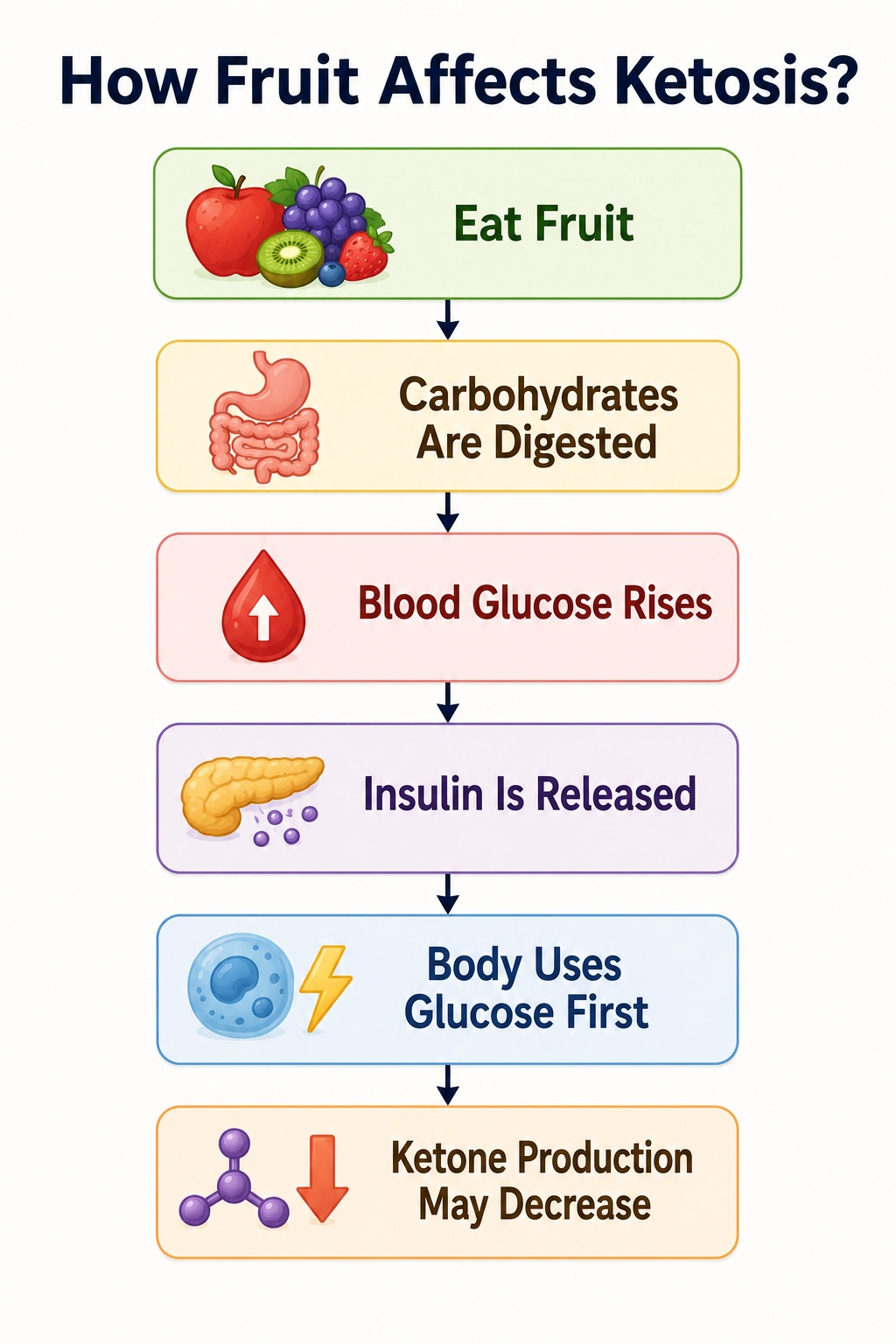
On a Keto Diet, you want to keep total daily carbohydrate intake low enough so that the liver continues producing ketones.
Eating a small serving of raspberries is unlikely to have the same effect as eating several bananas or drinking a large glass of fruit juice.
This is why your total daily carbohydrate intake matters more than any single food. So, let’s dig deeper and learn more about portions and servings.
Yes, you can have keto friendly fruits every day on a Keto Diet, but in small portions. Fruit should be a part of your overall carbohydrate intake rather than eating it in addition to high-carb foods.
For example, if your daily limit is 20 grams of net carbs, you might consume:
These choices can fit ketogenic meal plans.
If you plan to consume Keto friendly fruits every day, you need to choose among the ones with the lowest levels of net carbohydrates.
Learn More: Keto Diet Rash: Causes, Symptoms, Treatment, and Prevention
The table below shows the net carbs in 100 grams of popular Keto friendly fruits.
The following table compares Keto friendly fruits from lowest to highest net carbs, using 100 grams as the standard serving size [6].
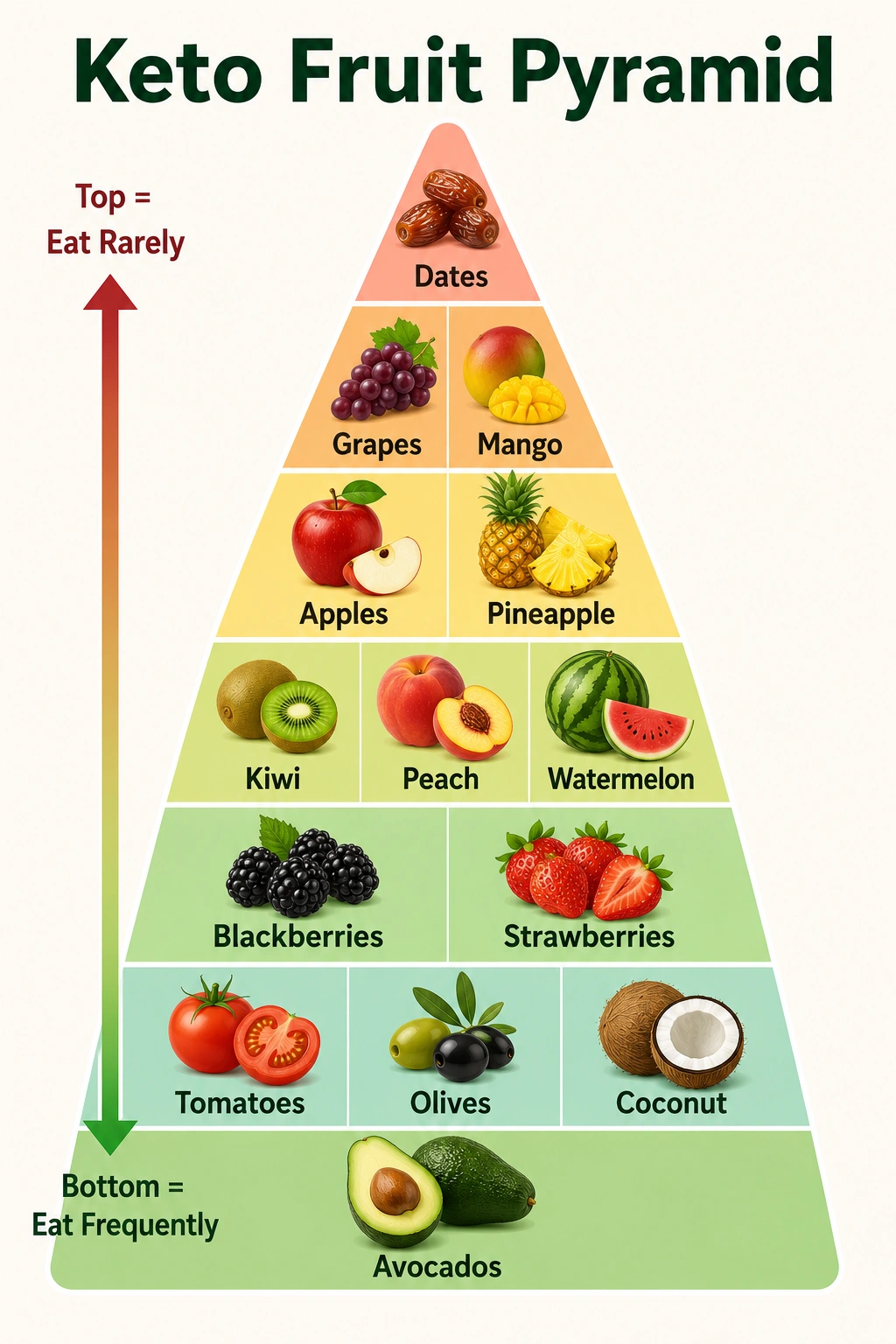
Instead of simply listing fruits, let's look at why each one fits or does not fit into a ketogenic diet.
Learn More: Foods with High Fiber: Do You Need Them on Low-Carb Diets?
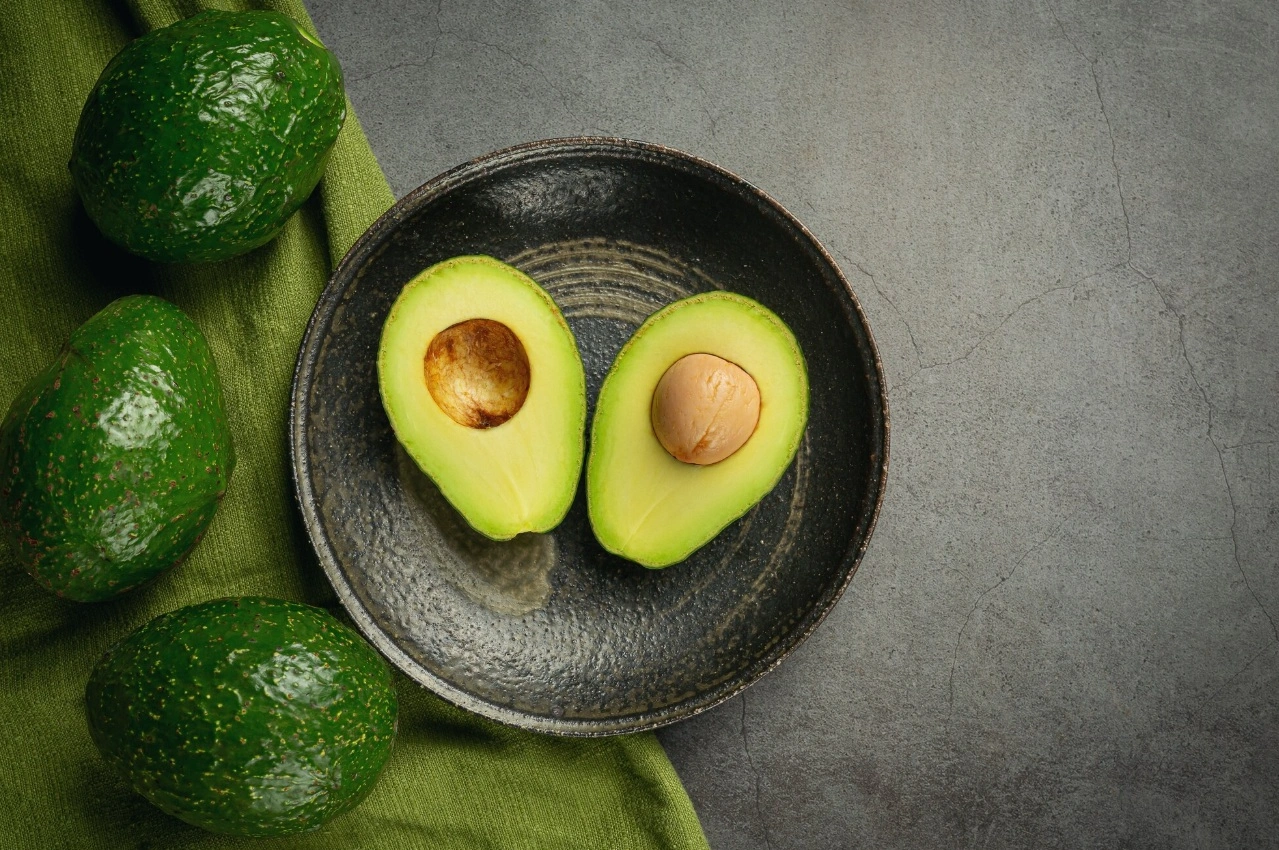
Avocados have 1.8g of net carbs per 100g and are technically a fruit but contain healthier fat than sugar. Their super low net carbohydrate content makes them one of the best fruits to include in a ketogenic diet.
The most important benefits of avocado include being:
You can use avocados in salads, guacamole, burgers, eggs, smoothies, and tuna salad. A typical serving is ½ medium avocado, which provides about 1-2 g net carbs.
Olives contain about 3g g of net carbs per 100g. They are overlooked fruits low in carbohydrates with healthy fats and polyphenols.
They are also rich in antioxidants with very low sugar. You can consume olives with cheese and in charcuterie boards, salads, chicken, and Mediterranean dishes.
Many people think of tomatoes as vegetables, but botanically they are categorized as fruits. They are among keto friendly fruits because most of their weight comes from water.
Tomatoes are low-calorie, easy to add to meals, and a good source of vitamin C and lycopene.
Tomatoes are an inseparable part of various Keot dishes, including burgers, salads, omelets, salsa, and caprese salad.
Learn More: 10 Best High Protein Low Carb Meals + Recipes & Tips [2026]
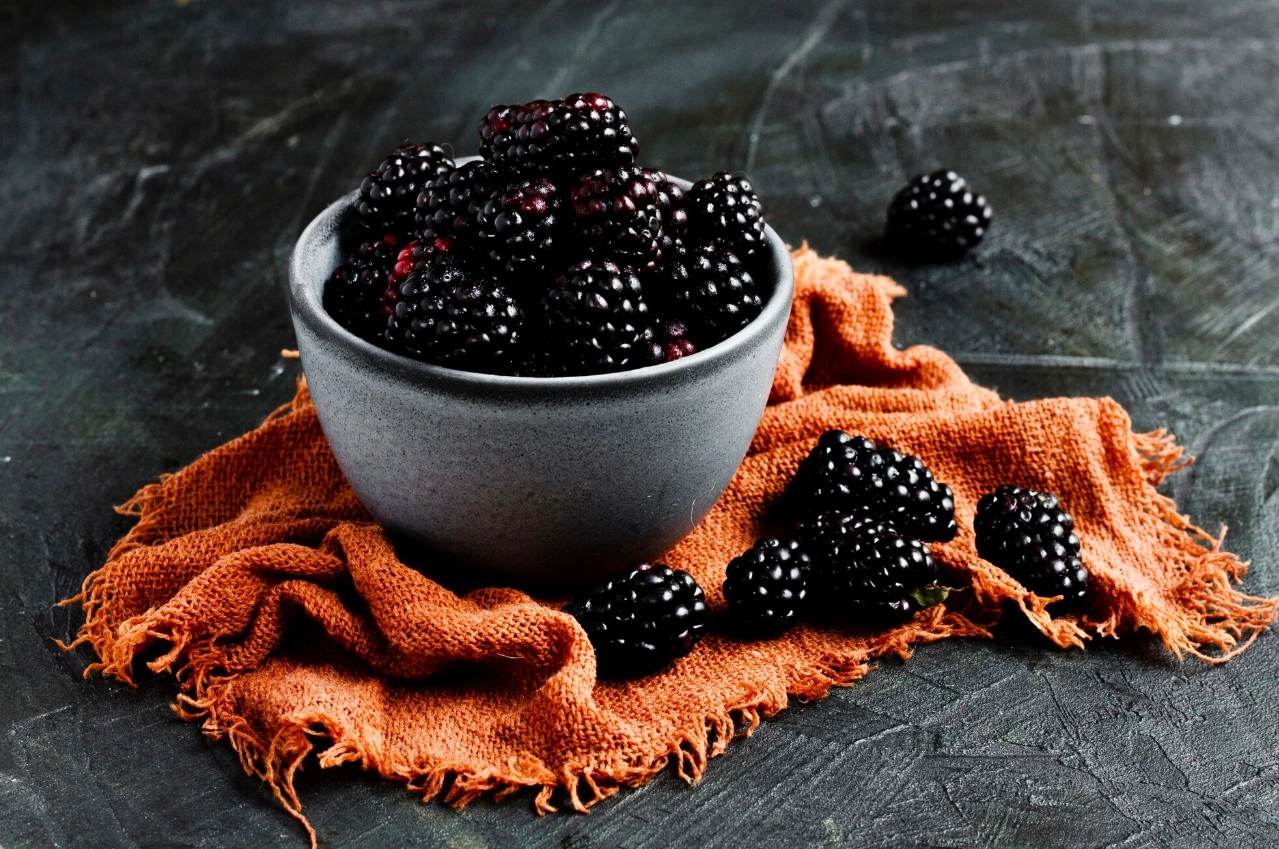
Among sweet fruits, blackberries are one of the best keto choices because they are high in fiber, low in sugar, rich in anthocyanins, and a great source of antioxidants.
You can consume them with Greek yogurt, cottage cheese, heavy whipped cream, and chia pudding. A ½ cup serving of blackberries contains about 3-4 grams of net carbs.
Raspberries contain one of the highest fiber contents among berries. That high fiber significantly lowers their net carbohydrate content.
Raspberries are a rich source of fiber and vitamin C, are high in antioxidants, and are a great dessert option. A ½ serving of raspberries contains about 3g of net carbs.
You can use raspberries in various recipes, for example as a Keto cheesecake topping, in yogurt parfait, and with smoothies and whipped cream.
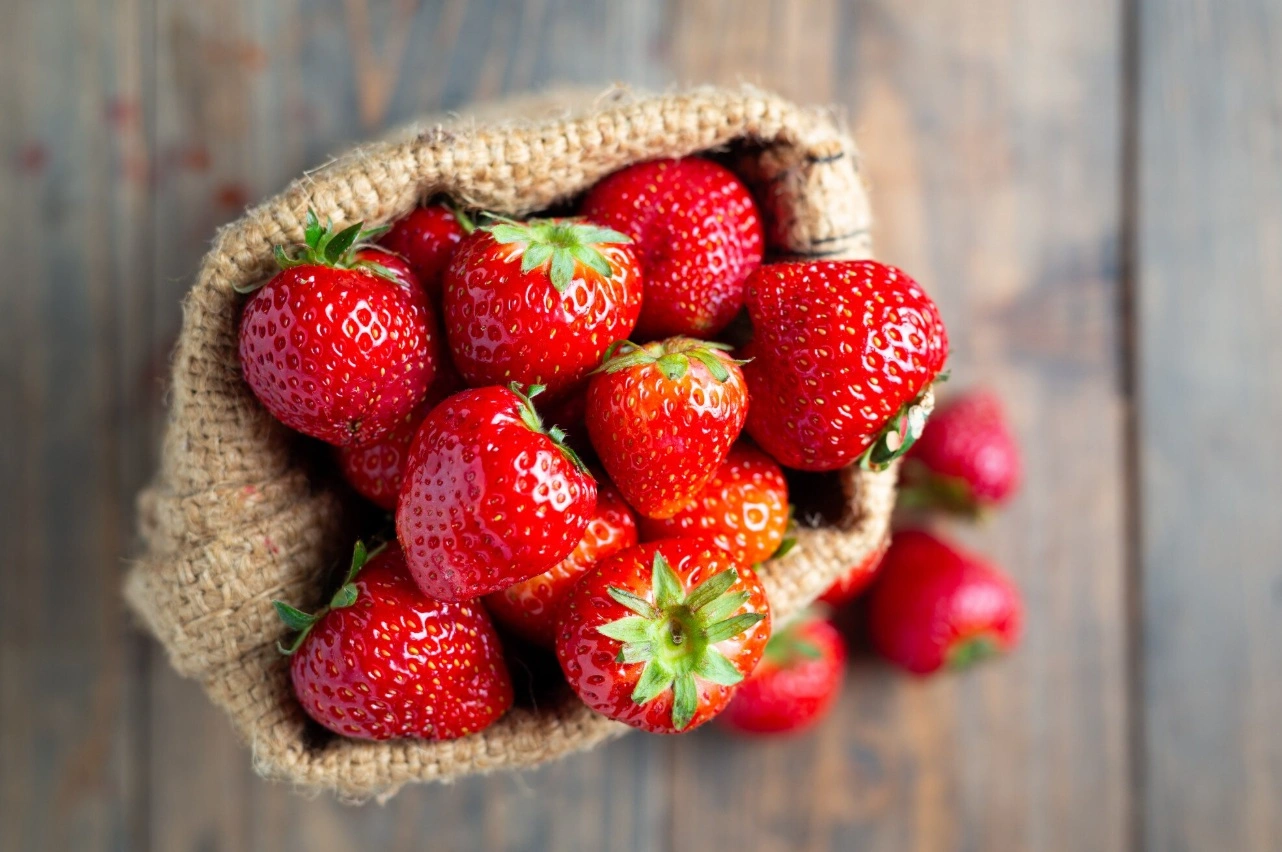
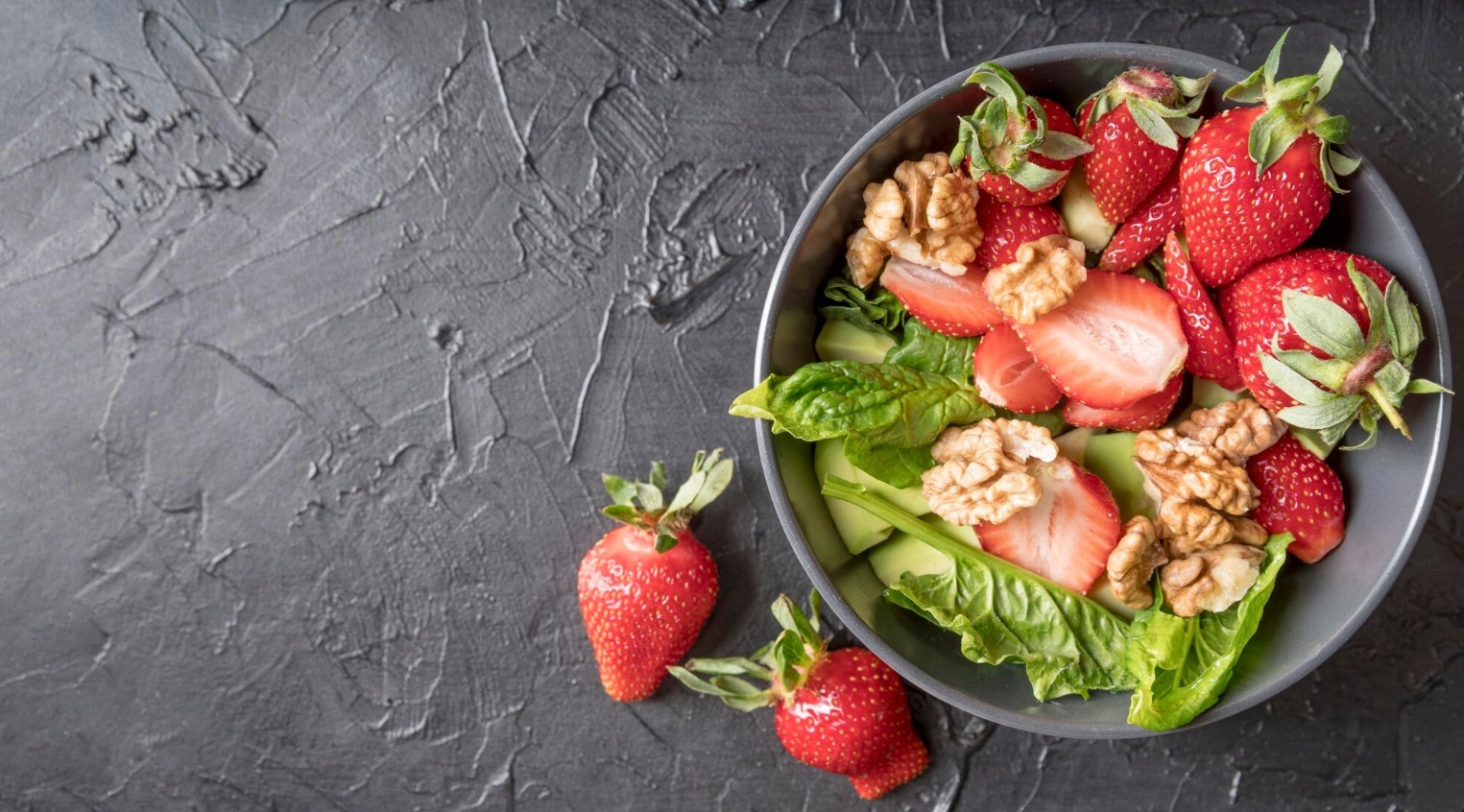
Strawberries are sweeter than raspberries but still relatively low in carbohydrates. They contain vitamin C, manganese, and antioxidants. About 5-6 medium strawberries provide about 4-5 g net carbs.
Learn More: 8 Leanest Steak Cuts to Gain Protein and Lose Weight + Tips
Fresh coconut is much lower in carbohydrates than many people realize. It is also high in healthy fats and fiber. You can use coconut in Keto desserts, coconut flakes, smoothies, and Keto fat bombs.
However, be careful: sweetened shredded coconut usually contains added sugar. So, choose unsweetened products if you are following a Low-Carb Diet or Keto Diet.
Few people eat lemons or limes by themselves, but their juice adds flavor without contributing many carbohydrates. You can also add them to water and tea, use them in salad dressings and marinades, or with seafood to make super delicious foods and drinks.
Learn More: 20+ Low Carb High Protein Low Calorie Recipes to Lose Weight
The following table shows fruits that are not the best choice for a low-carb Keto Diet, but you can include them occasionally if you can carefully control portions.
Only consume them if the rest of your day's meals are very low in carbohydrates.
The table below shows fruits that are usually too high in carbohydrates, so you should avoid them on a Keto Diet.
Actually, one of the best ways to decide whether to add Keto friendly fruits to your meal plan or not, or how much of them, is your keto diet goals.
To lose weight, lower carbohydrates, and balance electrolytes, use avocados. If you are trying to increase your fiber intake, use raspberries.
Learn More: 20+ High Protein Low Carb Snacks for Keto and Carnivore Diet
Speaking of berries, you may wonder which berry is practically the best option for a Keto Diet. Let’s find out.
The table below compares the most common types of berries so you can decide which one is better for you based on your goals and eating plans on a Keto Diet.
Takeaway:
While blueberries are nutritious, blackberries, raspberries, and strawberries are generally better for a ketogenic diet because they provide significantly fewer net carbs per serving.
There is also another point you need to consider about Keto friendly fruits. Different forms of fruit contain different levels of carbohydrates, meaning that fresh, frozen, and dried fruit and fruit juice have varying carb content.
Learn More: 15 Keto Recipes: Dinner, Soup, Quick Bites, Snacks, Desserts
The biggest mistake many keto beginners make is assuming fruit juice or dried fruit are the same as fresh fruit. Let’s learn how they differ and which ones are better on a Keto Diet.
Dried fruit is one of the least keto-friendly forms of fruit because removing water concentrates the sugar and carbohydrates. When fruit is dried, most of the water is removed, but the sugar remains.
For example:
You should also note that people rarely eat exactly 100 grams of fruit. So, let’s check the real portions and their approximate net carbs to see how many carbs we can really get from keto friendly fruits.
Learn More: Are Pumpkin Seeds Keto? The Best Ways to Eat Pumpkin Seeds
Since we do not practically eat 100 grams of fruit when we eat them, let’s look at real-life portions and the number of carbohydrates they can actually give us.
The amount of fruit you can eat on a ketogenic diet depends on your daily net carb limit, which is usually:
Let’s learn how many fruits we can eat in one day on each of these versions of the Keto Diet.
Learn More: Pemmican Recipe: How to Make Pemmican for Keto and Carnivore
You must be very selective. For example, you can consume the following amounts of keto friendly fruits in one day:
Total fruit carbs: 4-6 g
Result: Ketosis easily maintained
You have more flexibility and can consume:
Total fruit carbs: 8-12 g
You can include slightly sweeter fruits, such as:
You should still avoid fruit juice, dried fruits, bananas, grapes, and mangos.
Learn More: 20+ Carnivore Diet Snacks You Should Try to Boost Energy
In addition to fruits, you can have low-carb, keto-friendly vegetables on a Keto Diet. But not all of them and not as much as you please!
Most of the keto diet followers get the majority of their daily carbohydrates from vegetables, not fruit, because they provide:
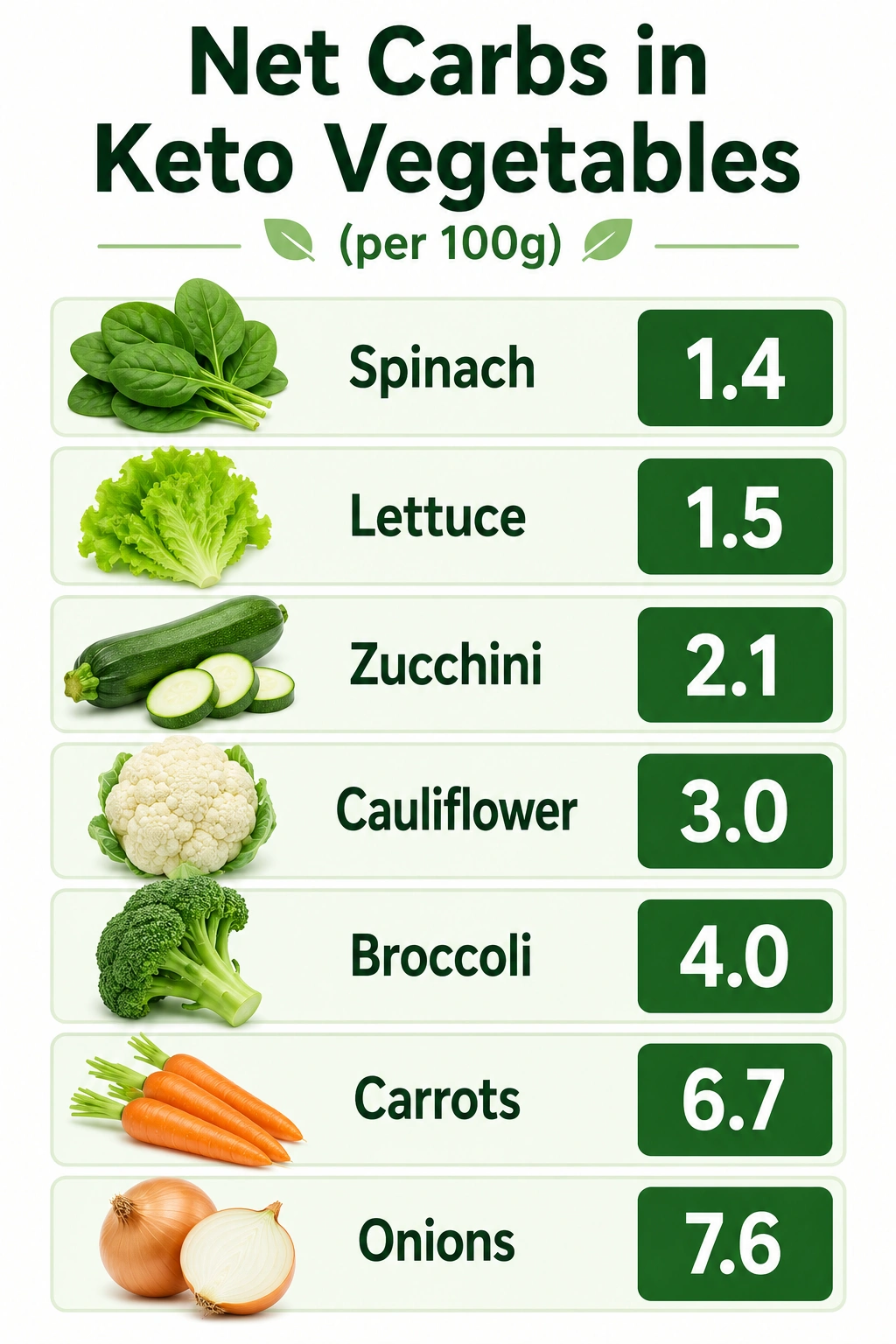
The table below ranks the most commonly used keto-friendly vegetables based on the net carbs per 100 grams.
Note:
Vegetables are not optional on keto; they are the main source of fiber, micronutrients, and food volume with low levels of net carbs.
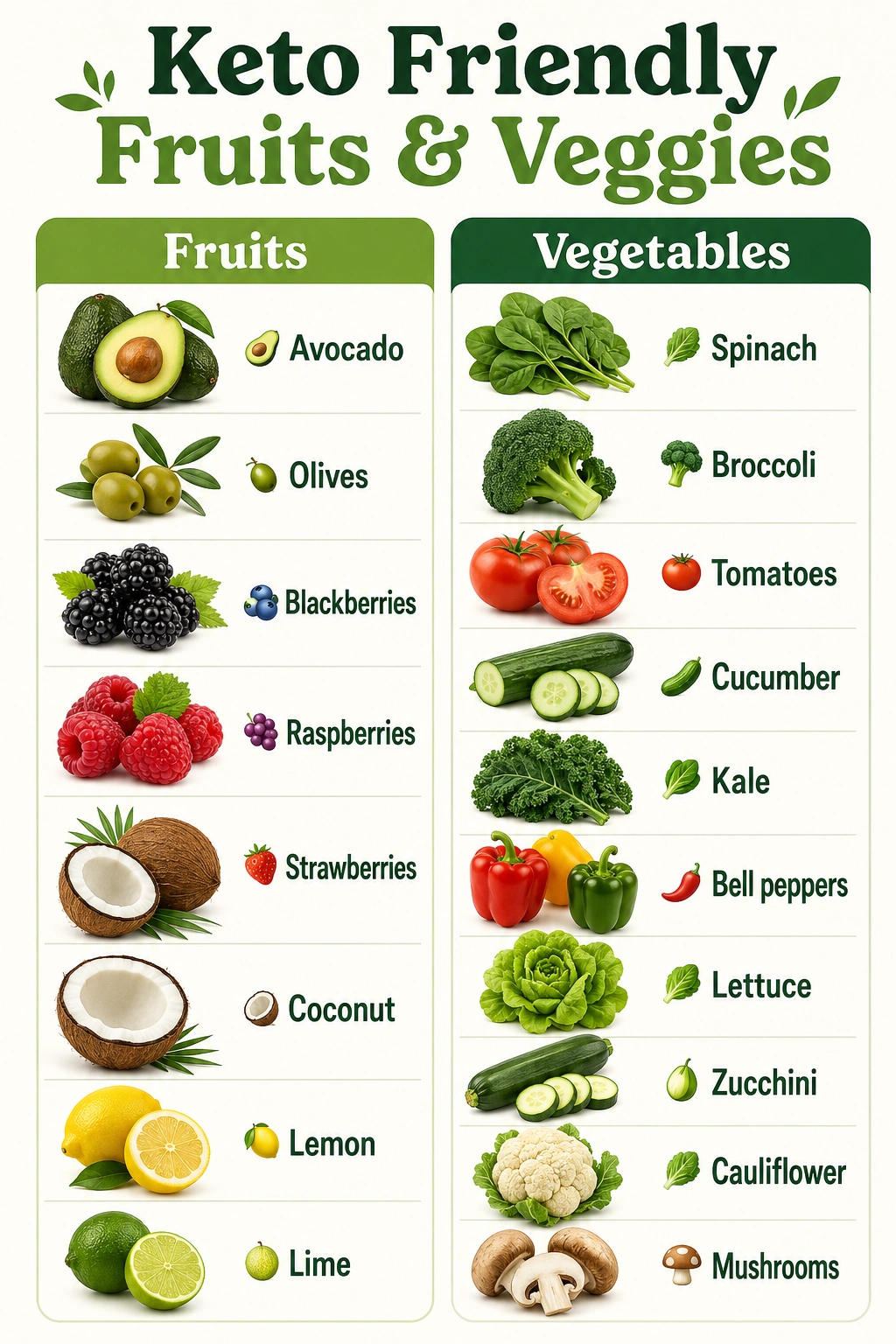
Here are the best keto-friendly veggies for different uses:
Learn More: 19 Easy Low Calorie Desserts for Low-Carb & Carnivore Diets
If you only remember one thing: You can eat fruit on keto, but only low-carb fruits in controlled portions that fit in your daily net carb limit.
Let’s find answers to the most frequently asked questions about Keto friendly fruits and vegetables.
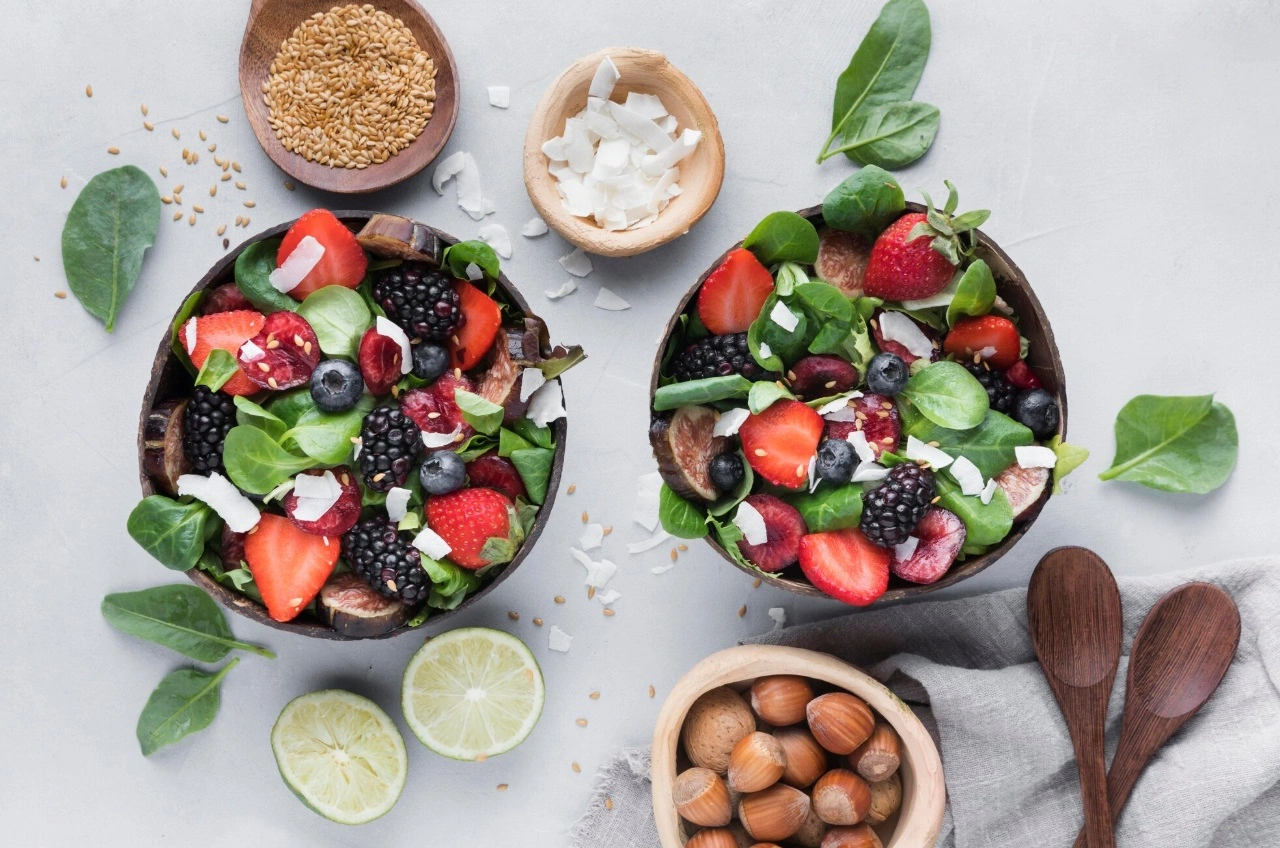
Yes, you can have small portions of low-carb keto friendly fruits like berries, avocado, olives, and tomatoes.
Learn More: Losing Weight and Plateau on Keto & Carnivore: Best Ways Out
Some of the best options include avocado, olives, raspberries, blackberries, strawberries, tomatoes, and coconut.
Yes, unsweetened frozen berries are one of the best keto fruits because they are easy, cheap, and nutritious. The best frozen keto fruits are raspberries, blackberries, and strawberries.
No, fruit juice is high in sugar and carbs. You’d better drink water with lemon or lime, sparkling water with berries, electrolyte drinks without sugar, or herbal tea with lemon on a Keto Diet.
Learn More: Best Low Carb Quick Foods Under 5 Mins for Keto & Carnivore
No, bananas are too high in net carbs for a ketogenic diet.
Yes, in very small amounts, but they are higher in carbs than other berries.
Small portions can be keto-friendly, but it is higher in sugar than other keto fruits and is better to avoid.
Yes, if you eat too much or consume high-sugar fruits like bananas, grapes, or juice.
No, but it adds to your total daily carbohydrate limits. So, it is better to keep it low.
Yes, they are one of the best low-carb fruits.
Learn More: 10 Best Air Fryer Steak Bites for Keto and Carnivore Diets
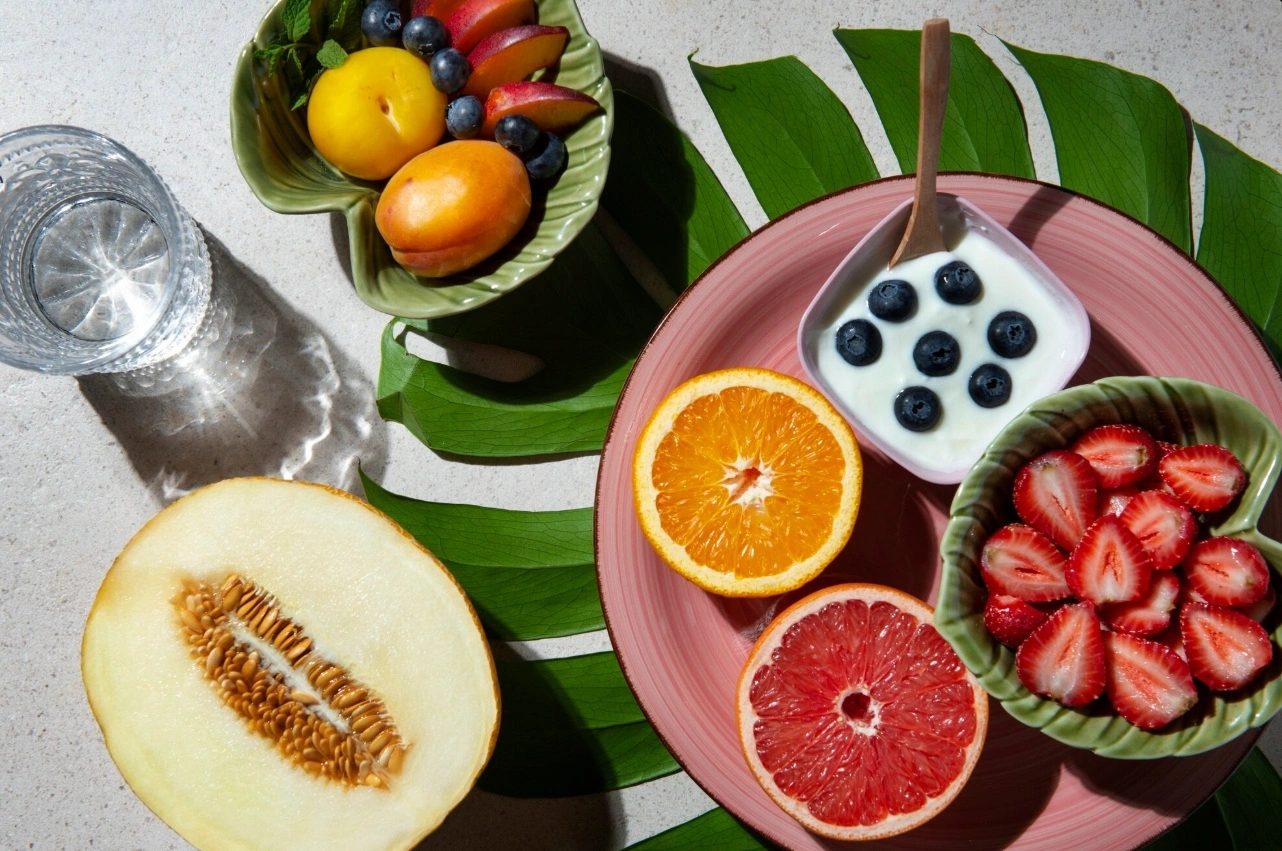
Yes, they are among the highest-fiber, lowest-net-carb fruits.
Yes, they are one of the most keto-friendly fruits due to high fat and very low net carbs.
No, dried fruits are too concentrated in sugar.
No, it contains high sugar and no fiber.
Yes, if portions are small and total carbs remain in your daily limit.
Avocado has the lowest net carbs of commonly eaten fruits.
Learn More: The Best Baked Pork Chops in Oven for Keto & Carnivore Diets
Yes, they are very low in carbs and usually used for flavor.
Spinach, lettuce, zucchini, cucumber, mushrooms, cauliflower, broccoli, kale, and asparagus are among the lowest-carb veggies, with 1-5 g of net carbs per 100 grams.
You should avoid or at least limit high-carb vegetables, such as potatoes, sweet potatoes, corn, peas, parsnips, and large amounts of carrots or onions.
Carrots can be keto-friendly if eaten in small portions. While they are higher in natural sugars than leafy greens, a few slices in salads or cooking is allowed on Keto.
Yes, broccoli is a keto-friendly vegetable. It is low in net carbs, high in fiber, and rich in vitamins C and K, with about 4 grams of net carbs per 100 grams.
Learn More: How to Air Fry Zucchini to Make a Low-Carb, Keto Meal?
Yes, but only in small amounts.
Yes, leafy greens such as spinach, kale, lettuce, and arugula are among the most keto-friendly vegetables available.
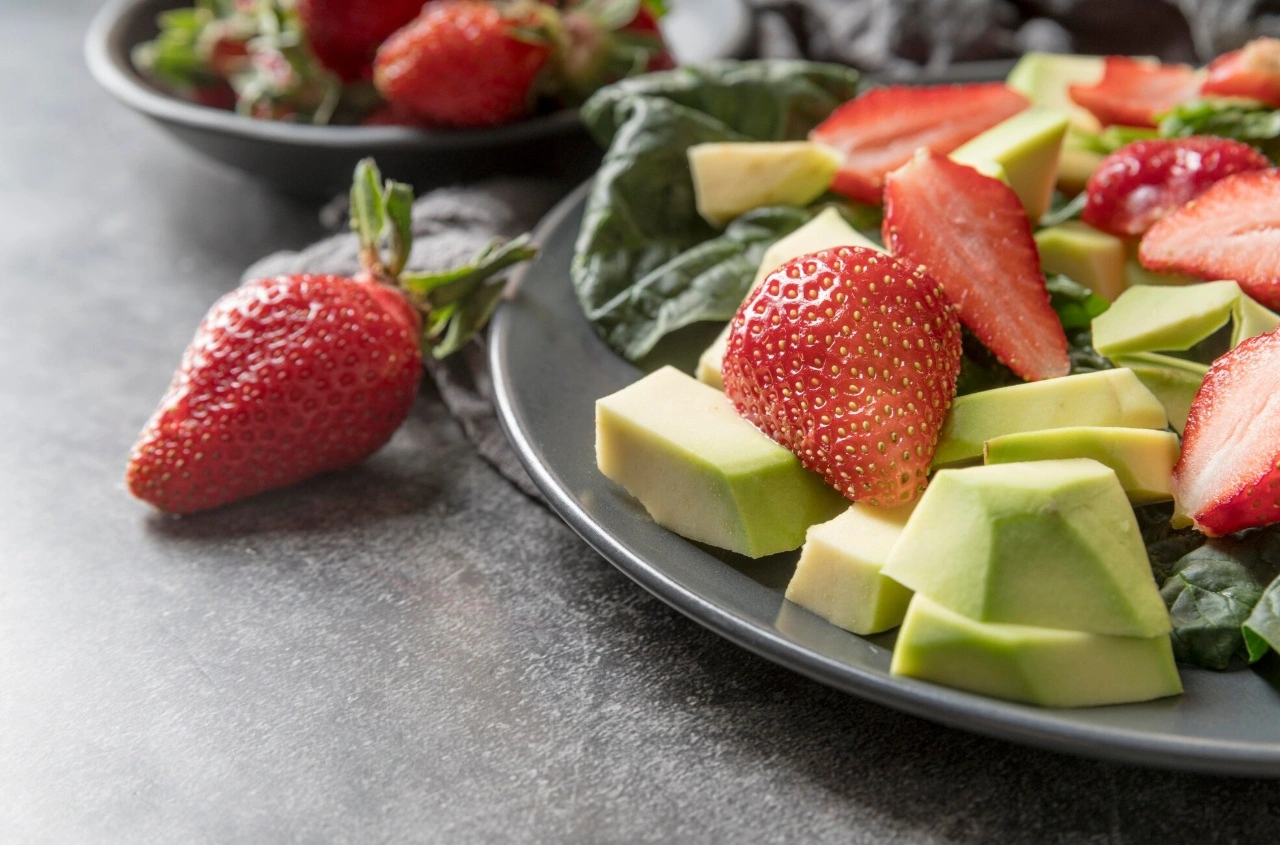
Yes, cauliflower is one of the most popular keto vegetables. It is very low in net carbs and can substitute rice, potatoes, and even pizza crust in keto recipes.
Bell peppers can be moderately keto-friendly if eaten in reasonable portions.
No, because they are not carb-free. Portion control is always important.
Learn More: Are Slim Jims Bad for You? Can I Eat It on Keto & Carnivore?
Yes, frozen vegetables are generally keto-friendly as long as they are unsweetened and unbreaded. Frozen spinach, broccoli, cauliflower, and zucchini have similar nutritional value to fresh vegetables.
Most low-carb vegetables will not kick you out of ketosis when eaten in normal portions. However, starchy vegetables like potatoes, corn, and large servings of carrots or peas can exceed your carb limit and disrupt ketosis.
This article is for educational purposes only and does not replace professional medical advice. Ketogenic diets may not be suitable for everyone, especially individuals with kidney disease or other metabolic conditions.
Always consult a qualified healthcare professional before making significant dietary changes.
This guide is based on:
This content is designed to help readers understand carbohydrate content in fruits within the context of a ketogenic diet. Individual tolerance to carbohydrates may vary.